 Products Home
Right-Angle Prisms
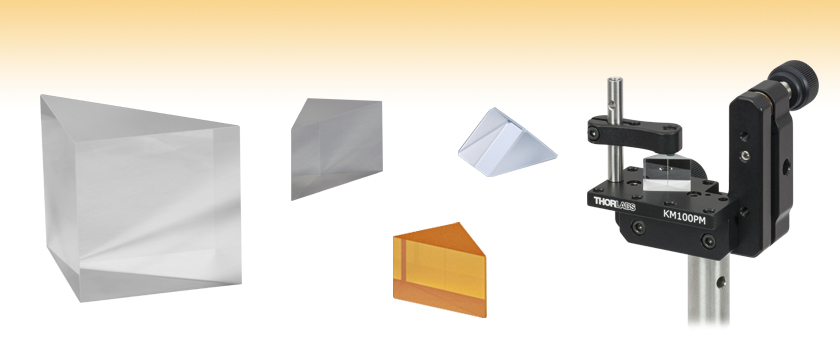
- Deviate Beam or Image by 90° or 180°
- Material: N-BK7, UV Fused Silica, CaF2, or ZnSe
- AR-Coated Versions Available
PS913
N-BK7, Uncoated
L = 60 mm
PS704
CaF2, Uncoated
L = 25 mm
PS701
ZnSe, Uncoated
L = 10 mm
PS910
N-BK7, Uncoated
L = 10 mm
Application Idea
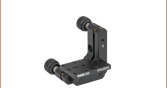
PS610 Prism on a
KM100PM Platform Mount






Please Wait
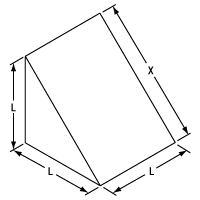
The size of these prisms is defined by the leg dimension, L, which is indicated in the product lists below.

Features
- Sizes Ranging from 3 mm to 60 mm
- Fabricated from N-BK7, UV Fused Silica, CaF2, or ZnSe
- N-BK7 Prisms Available with an AR Coating on the Hypotenuse or Both Legs
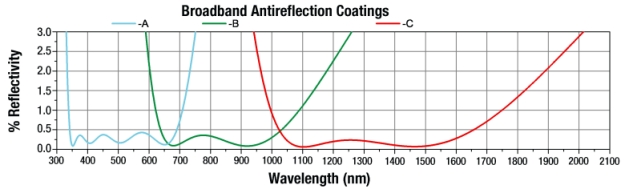
Thorlabs' high-precision Right-Angle Prisms can be used to deviate a light path by 90° or 180°, depending on which surface is used as the input for the light source. These prisms are fabricated from N-BK7, UV fused silica, CaF2, or ZnSe, and they are offered in sizes ranging from 3 mm to 60 mm. Our N-BK7 right-angle prisms are available uncoated or with one of our three standard broadband antireflection coatings (-A: 350 - 700 nm, -B: 650 - 1050 nm, -C: 1050 - 1700 nm) on either the hypotenuse or both legs, thereby reducing surface losses.
Due to total internal reflection (TIR), Video 1 (to the left below) demonstrates how the right-angle prism can be used as a 90° reflector. When the input light is incident on one of the prism's legs, it undergoes TIR at the glass/air boundary of the hypotenuse and exits via the other prism leg. This 90° deviation of the input light makes the right-angle prism a suitable alternative to a mirror.
Video 2 (to the right below) shows how the right-angle prism can be used as a 180° retroreflector. When the input light is incident on the face of the hypotenuse, it undergoes TIR at the glass/air boundary at the prism legs. It undergoes TIR a second time at the next prism leg and exits the hypotenuse in a path parallel to that of the input beam. Like the retroreflector, the 180° deviation of the light path is independent of the angle at which the light enters the prism.
Please refer to the Prism Guide tab above for assistance in selecting the appropriate prism for your application. For additional antireflecton coating requests, please contact Tech Support.
| General Specifications | ||||
|---|---|---|---|---|
| Material | UV Fused Silicaa | N-BK7a,b | CaF2a | ZnSea |
| Clear Aperture | 70% of Face Length and Width | |||
| Surface Quality | 40-20 Scratch-Dig | 60-40 Scratch-Dig | ||
| Surface Flatness | λ/10 at 633 nm | λ/2 at 633 nm | ||
| Number of Polished Faces | 3 (Triangular Faces are Fine Ground) | |||
| PS911K Knife-Edge Prism Specifications | |
|---|---|
| Material | N-BK7a |
| Clear Aperture (Legs) |
Entire Face Length And Width Excluding a 1.25 mm Border Along Beveled Edges (No Bevel Between the Two Legs) |
| Clear Aperture (Hypotenuse) |
90% of Face Length and Width |
| Surface Quality | 20-10 Scratch-Dig |
| Surface Flatness @ 633 nm |
λ/8 |
| Number of Polished Faces | 3 (Triangular Faces are Fine Ground) |
The size of these prisms is defined by the leg dimension, L, which is indicated in the product list below.
Uncoated Prisms
| Item # | Material | La | Xa | Angle Tolerance | Dimensional Tolerance |
|---|---|---|---|---|---|
| PS605 | UV Fused Silicab | 3 mm | 4.2 mm | ±10 arcmin | ±0.2 mm |
| PS609 | 5 mm | 7.1 mm | ±3 arcmin | ±0.2 mm | |
| PS610 | 10 mm | 14.1 mm | ±3 arcmin | ±0.2 mm | |
| PS614 | 12.5 mm | 17.7 mm | ±3 arcmin | ±0.2 mm | |
| PS615 | 15 mm | 21.2 mm | ±3 arcmin | ±0.2 mm | |
| PS608 | 20 mm | 28.3 mm | ±3 arcmin | ±0.2 mm | |
| PS611 | 25 mm | 35.4 mm | ±3 arcmin | ±0.2 mm | |
| PS612 | 40 mm | 56.6 mm | ±3 arcmin | ±0.2 mm | |
| PS613 | 60 mm | 84.9 mm | ±3 arcmin | ±0.2 mm | |
| PS905 | N-BK7 | 3 mm | 4.2 mm | ±10 arcmin | ±0.1 mm |
| PS909 | 5 mm | 7.1 mm | ±3 arcmin | ±0.1 mm | |
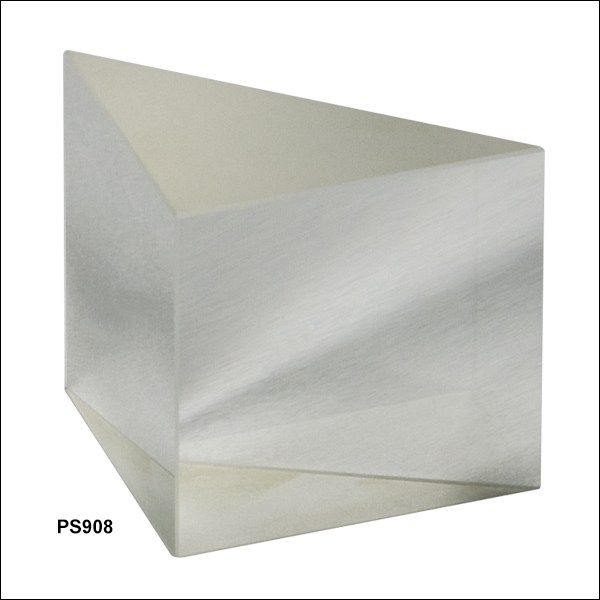
| PS910 | 10 mm | 14.1 mm | ±3 arcmin | ±0.1 mm | |
| PS914 | 12.5 mm | 17.7 mm | ±3 arcmin | ±0.2 mm | |
| PS915 | 15 mm | 21.2 mm | ±3 arcmin | ±0.2 mm | |
| PS908 | 20 mm | 28.3 mm | ±3 arcmin | ±0.1 mm | |
| PS911 | 25 mm | 35.4 mm | ±3 arcmin | ±0.1 mm | |
| PS912 | 40 mm | 56.6 mm | ±3 arcmin | ±0.1 mm | |
| PS919 | 50 mm | 70.7 mm | ±3 arcmin | ±0.1 mm | |
| PS913 | 60 mm | 84.9 mm | ±3 arcmin | ±0.1 mm | |
| PS703 | CaF2 | 10 mm | 14.1 mm | ±10 arcmin | +0.0/-0.3 mm |
| PS706 | 12.5 mm | 17.7 mm | ±10 arcmin | ±0.2 mm | |
| PS707 | 15 mm | 21.2 mm | ±10 arcmin | ±0.2 mm | |
| PS704 | 25 mm | 35.4 mm | ±10 arcmin | +0.0/-0.3 mm | |
| PS701 | ZnSe | 10 mm | 14.1 mm | ±10 arcmin | +0.0/-0.3 mm |
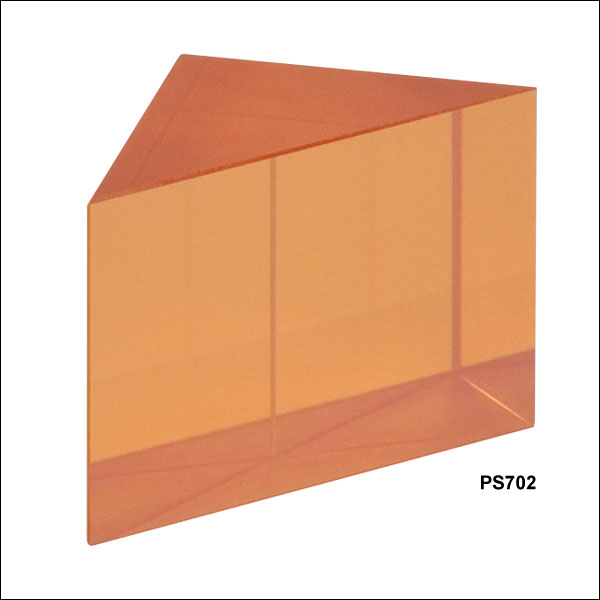
| PS702 | 25 mm | 35.4 mm | ±10 arcmin | +0.0/-0.3 mm |
Coated Prisms
| Item # | Material | La | Xa | Angle Tolerance | Dimensional Tolerance | AR Coating | AR Coating Performance |
|---|---|---|---|---|---|---|---|
| PS910H-A | N-BK7 | 10.0 mm | 14.1 mm | ±3 arcmin | ±0.1 mm | 350 - 700 nm, Hypotenuse | Ravg ≤ 0.5% at AOI = 0° Over Specified Wavelength Range |
| PS910H-B | ±3 arcmin | ±0.1 mm | 650 - 1050 nm, Hypotenuse | ||||
| PS910H-C | ±3 arcmin | ±0.1 mm | 1050 - 1700 nm, Hypotenuse | ||||
| PS910L-A | ±3 arcmin | ±0.1 mm | 350 - 700 nm, Legs | ||||
| PS910L-B | ±3 arcmin | ±0.1 mm | 650 - 1050 nm, Legs | ||||
| PS910L-C | ±3 arcmin | ±0.1 mm | 1050 - 1700 nm, Legs | ||||
| PS914H-A | 12.5 mm | 17.7 mm | ±3 arcmin | ±0.2 mm | 350 - 700 nm, Hypotenuse | ||
| PS914H-B | ±3 arcmin | ±0.2 mm | 650 - 1050 nm, Hypotenuse | ||||
| PS914H-C | ±3 arcmin | ±0.2 mm | 1050 - 1700 nm, Hypotenuse | ||||
| PS914L-A | ±3 arcmin | ±0.2 mm | 350 - 700 nm, Legs | ||||
| PS914L-B | ±3 arcmin | ±0.2 mm | 650 - 1050 nm, Legs | ||||
| PS914L-C | ±3 arcmin | ±0.2 mm | 1050 - 1700 nm, Legs | ||||
| PS915H-A | 15.0 mm | 21.2 mm | ±3 arcmin | ±0.2 mm | 350 - 700 nm, Hypotenuse | ||
| PS915H-B | ±3 arcmin | ±0.2 mm | 650 - 1050 nm, Hypotenuse | ||||
| PS915H-C | ±3 arcmin | ±0.2 mm | 1050 - 1700 nm, Hypotenuse | ||||
| PS915L-A | ±3 arcmin | ±0.2 mm | 350 - 700 nm, Legs | ||||
| PS915L-B | ±3 arcmin | ±0.2 mm | 650 - 1050 nm, Legs | ||||
| PS915L-C | ±3 arcmin | ±0.2 mm | 1050 - 1700 nm, Legs | ||||
| PS908H-A | 20.0 mm | 28.3 mm | ±3 arcmin | ±0.1 mm | 350 - 700 nm, Hypotenuse | ||
| PS908H-B | ±3 arcmin | ±0.1 mm | 650 - 1050 nm, Hypotenuse | ||||
| PS908H-C | ±3 arcmin | ±0.1 mm | 1050 - 1700 nm, Hypotenuse | ||||
| PS908L-A | ±3 arcmin | ±0.1 mm | 350 - 700 nm, Legs | ||||
| PS908L-B | ±3 arcmin | ±0.1 mm | 650 - 1050 nm, Legs | ||||
| PS908L-C | ±3 arcmin | ±0.1 mm | 1050 - 1700 nm, Legs |


| Posted Comments: | |
Colin Stephen
(posted 2024-05-02 10:50:32.393) Have you considered AB coated hypotenuse right angled prisms? Would these be expensive as a custom order?
Also, would you have any advice on optically gluing a dichroic to a prism or do you produce any dichroic prisms?
Thanks,
Colin user
(posted 2024-04-22 13:48:58.29) Hello, what is the difference between an RA prism and an RA mirror as both of them have their hypotenuse coated with a reflective coating with uncoated legs?
Thanks! cdolbashian
(posted 2024-04-26 03:38:11.0) Thank you for reaching out to us with this inquiry. The RA prism do not have a reflective coating on the hypotenuse, but rather are polished on the hypotenuse, feature AR coatings on the legs, and rely on TIR for the reflection of the beam/image. The Prism mirrors are designed as planar mirrors with the prism-shaped substrate with a high reflectivity coating on the hypotenuse at the Air-glass interface. user
(posted 2024-02-11 09:30:59.76) The "Axicons" link in the prism guide doesn't seem to be correct. cdolbashian
(posted 2024-02-19 09:15:12.0) Thank you for finding this incorrect link on the website and sharing it with us! We have made updates to link to appropriate locations. user
(posted 2019-11-18 10:47:04.13) Hi, we are in need a retroretlecting right-angle prism with anti-reflective coating on the hypotenuse, and reflective on both other sides. However, it needs a hypotenuse length of (minimum) 2 inches, which is not available. If not a right-angle prism mirror, any retroreflector which would do the same job would be fine. Is this possible? nbayconich
(posted 2019-11-19 02:53:17.0) Thank you for contacting Thorlabs. I will reach out to you directly to discuss our custom capabilities. For future custom inquiries please contact us at techsupport@thorlabs.com. Grant Grossbier
(posted 2019-07-16 10:55:29.133) What is laser damage threshold for this product in CW? YLohia
(posted 2019-08-28 03:24:43.0) Thank you for contacting Thorlabs. Unfortunately, we do not have a formal damage threshold rating for this yet. I have reached out to you directly to discuss further. bettina.schoke-sartisohn
(posted 2018-01-22 16:24:15.743) Hi, I would like to know if it is possible to get the PS605, PS609, PS905 or PS909 AR coated on the legs for 350-700nm? nbayconich
(posted 2018-01-24 10:26:42.0) Thank you for contacting Thorlabs. Yes we can provide these prisms with AR coating for the legs. I will reach out to you directly with a quote. deugarte
(posted 2016-03-08 18:35:34.59) I would like to know if it is possible to get the PS913 (60 mm) with AR coated legs? I also see that the quality is only guaranteed over 70% of the surfaces, I would like to know how does the quality usually differ outside that 70%. besembeson
(posted 2016-03-10 04:24:28.0) Response from Bweh at Thorlabs USA: Yes it will be possible. I will contact you regarding a quotation and comment on the quality outside the 70% specification. benjamin.judkewitz
(posted 2016-02-05 18:20:04.34) Do you offer a B-coated version of the
PS911 prism? besembeson
(posted 2016-02-10 08:40:29.0) Response from Bweh at Thorlabs USA: Yes this can be provided as a special item for now. We will contact you. user
(posted 2015-05-29 09:40:38.673) Hello,
I bought a PS914H-A. Do you have data about the polarisation loss? besembeson
(posted 2015-07-28 07:24:28.0) Response from Bweh at Thorlabs USA: This will maintain horizontal and vertical polarizations when used in the Porro prism configuration. However, for a polarized input beam with a different orientation, the polarization is not maintained. william.dai
(posted 2014-07-01 12:19:00.257) What is the damage threshold for this prism's coating? My laser runs at 940nm, 7.5mmx10mm laser beam cross section at 1/e^2, maximum on-time of 10 seconds, max power of 50 W. jlow
(posted 2014-08-07 08:45:51.0) Response from Jeremy at Thorlabs: The damage threshold for the PS908L-B should be similar to our -B coated N-BK7 windows, which is 7.5 J/cm^2 (tested at 810 nm, 10 ns, 10 Hz, Ø0.144 mm). jlow
(posted 2012-11-13 16:34:00.0) Response from Jeremy at Thorlabs: If an appropriate prism with the right AR coating is used, then the loss should be <2% (estimated) when used as a 90° reflector. cbrideau
(posted 2012-11-13 13:02:08.243) Like scottie, I'd like to know what the estimated losses would be using the prism as a 90-degree reflector for the near UV and violet-blue? (350-450nm) scottie730318
(posted 2012-10-28 22:26:55.98) I would like to know if the PS908L-C is used to internally reflect 1060nm laser beams. What is the energy loss? Thank you. tcohen
(posted 2012-06-21 13:54:00.0) Response from Tim at Thorlabs: Thank you for your feedback. I have contacted you to discuss your application further. An important point to note for our mirror coatings is that they are not intended for internal reflection. shaun.johnstone
(posted 2012-06-21 09:01:44.0) Larger N-BK7 prisms (e.g. the 20-40mm range) with their hypotenuse AR coated, and their legs gold or silver coated, would be useful for making 2D MOTs with retroreflected beams (see e.g. http://dx.doi.org/10.1051/epjap:2006037) user
(posted 2011-11-23 18:13:06.0) A Response from Tyler at Thorlabs: The PS610 can be used with 213 nm light. Between surface reflections and internal absorption, the transmitted beam will losses will be approximately 12 percent for your laser. We will contact you with the transmission data, including surface reflections, for UV fused silica. laser4u
(posted 2011-11-14 04:02:27.0) I would like to know if the PS610 can be used to internally reflect 213nm laser beams. If yes, what is the energy loss?
Our laser emits 213nm@2mJ/pulse@50Hz, beam diameter around 5mm.
Thank you.
Yiannis Theodoulou
Laser Physicist
Managing Director
Laserlabs Ltd
Limassol, Cyprus Javier
(posted 2010-06-14 13:20:49.0) Response from Javier at Thorlabs to djchen: at this time, we cannot offer custom right cangle prisms that meet your requirements. The angular tolerance for these prisms is specified as +/- 3 arcmin. djchen
(posted 2010-06-14 10:45:56.0) Is it possible to customize right angle prisms?
My specifications are:
90 degree deviation < 2arcsec.
Pyramidal error between the hypotenuse face and the corresponding edge < 2arcsec.
Thank you. apalmentieri
(posted 2010-02-18 11:24:25.0) A response from Adam at Thorlabs to jcmgebh: The 90 degree edge has a chamfered edge: 0.2 mm X 0.2 mm. Therefore, this edge is not sharp and should not hurt people. jcmgebh
(posted 2010-02-18 10:41:12.0) I wanted to know how sharp the 90 degree edge is. Or is it blunt in order not to hurt people?
Sincerely,
Christof Gebhardt apalmentieri
(posted 2010-01-06 14:55:47.0) A response from Adam at Thorlabs to Yuri: It is possible to get a V coating for 308nm on the PS611. The specifications of our V-coatings are %R< .25% for AOI of 0 degrees. I will email you directly to get more information about the coating you are looking for. yuri.kudryavtsev
(posted 2010-01-06 11:59:42.0) Is it possible to have UV (308nm)AR coating on PS611? apalmentieri
(posted 2009-07-15 17:39:25.0) A response from Adam at Thorlabs: We currently do not offer the prism you reference as a standard stock item, but we may be able to cut our stock items down to size. I will check with our optics division and let you know via email. funrunner13
(posted 2009-07-14 19:22:51.0) Hi, Im looking for a right angled prism where the lengths of the legs (A and B) are not equal to the length of side h. I would like A=B=10 mm and h = 20 mm. Do you offer this?
Thank you for your consideration,
Leo Montilla Laurie
(posted 2009-05-06 14:07:00.0) Response from Laurie at Thorlabs to rene.schneider: We can provide our 5 mm prisms with AR-coated legs. Someone from our technical support staff will get in contact with you shortly to find out which AR coating you need (-A, -B, or -C) and the quantity that you require. Thanks for your interest in our right-angle prisms. rene.schneider
(posted 2009-05-06 11:49:54.0) Hello,
im looking for a right angeled prism (UV fused silica) with AR-coated legs and a size of 5mm. Do you offer prisms with these specifications?
Kind regards, Rene Schneider |
Selection Guide for Prisms
Thorlabs offers a wide variety of prisms, which can be used to reflect, invert, rotate, disperse, steer, and collimate light. For prisms and substrates not listed below, please contact Tech Support.
Beam Steering Prisms
| Prism | Material | Deviation | Invert | Reverse or Rotate | Illustration | Applications |
|---|---|---|---|---|---|---|
| Right Angle Prisms | N-BK7, UV Fused Silica, Calcium Fluoride, or Zinc Selenide | 90° | 90° | No | 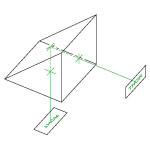 |
90° reflector used in optical systems such as telescopes and periscopes. |
| 180° | 180° | No | 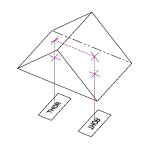 |
180° reflector, independent of entrance beam angle. Acts as a non-reversing mirror and can be used in binocular configurations. |
||
| TIR Retroreflectors (Unmounted and Mounted) and Specular Retroreflectors (Unmounted and Mounted) |
N-BK7 | 180° | 180° | No | 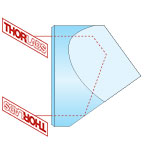 |
180° reflector, independent of entrance beam angle. Beam alignment and beam delivery. Substitute for mirror in applications where orientation is difficult to control. |
| Unmounted Penta Prisms and Mounted Penta Prisms |
N-BK7 | 90° | No | No | 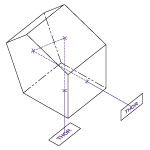 |
90° reflector, without inversion or reversal of the beam profile. Can be used for alignment and optical tooling. |
| Roof Prisms | N-BK7 | 90° | 90° | 180o Rotation | 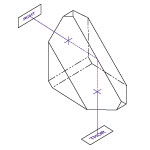 |
90° reflector, inverted and rotated (deflected left to right and top to bottom). Can be used for alignment and optical tooling. |
| Unmounted Dove Prisms and Mounted Dove Prisms |
N-BK7 | No | 180° | 2x Prism Rotation | 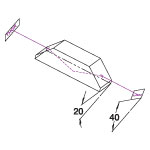 |
Dove prisms may invert, reverse, or rotate an image based on which face the light is incident on. Prism in a beam rotator orientation. |
| 180° | 180° | No | 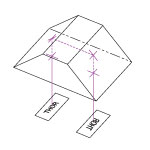 |
Prism acts as a non-reversing mirror. Same properties as a retroreflector or right angle (180° orientation) prism in an optical setup. |
||
| Wedge Prisms | N-BK7 | Models Available from 2° to 10° | No | No | 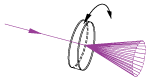 |
Beam steering applications. By rotating one wedged prism, light can be steered to trace the circle defined by 2 times the specified deviation angle. |
| No | No | 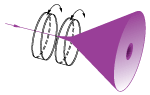 |
Variable beam steering applications. When both wedges are rotated, the beam can be moved anywhere within the circle defined by 4 times the specified deviation angle. |
|||
| Coupling Prisms | Rutile (TiO2) or GGG | Variablea | No | No | 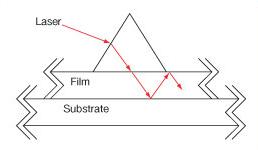 |
High index of refraction substrate used to couple light into films. Rutile used for nfilm > 1.8 GGG used for nfilm < 1.8 |
Dispersive Prisms
| Prism | Material | Deviation | Invert | Reverse or Rotate | Illustration | Applications |
|---|---|---|---|---|---|---|
| Equilateral Prisms | F2, N-F2, N-SF11, Calcium Fluoride, or Zinc Selenide |
Variablea | No | No | 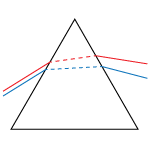 |
Dispersion prisms are a substitute for diffraction gratings. Use to separate white light into visible spectrum. |
| Dispersion Compensating Prism Pairs | Fused Silica, Calcium Fluoride, SF10, or N-SF14 | Variable Vertical Offset | No | No | 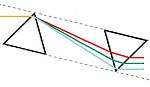 |
Compensate for pulse broadening effects in ultrafast laser systems. Can be used as an optical filter, for wavelength tuning, or dispersion compensation.
|
| Pellin Broca Prisms | N-BK7, UV Fused Silica, or Calcium Fluoride |
90° | 90° | No |  |
Ideal for wavelength separation of a beam of light, output at 90°. Used to separate harmonics of a laser or compensate for group velocity dispersion. |
Beam Manipulating Prisms
| Prism | Material | Deviation | Invert | Reverse or Rotate | Illustration | Applications |
|---|---|---|---|---|---|---|
| Anamorphic Prism Pairs | N-KZFS8 or N-SF11 |
Variable Vertical Offset | No | No | 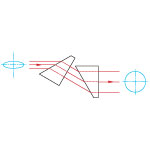 |
Variable magnification along one axis. Collimating elliptical beams (e.g., laser diodes) Converts an elliptical beam into a circular beam by magnifying or contracting the input beam in one axis. |
| Axicons (UVFS, ZnSe) | UV Fused Silica or Zinc Selenide |
Variablea | No | No | 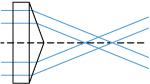 |
Creates a conical, non-diverging beam with a Bessel intensity profile from a collimated source. |
Polarization Altering Prisms
| Prism | Material | Deviation | Invert | Reverse or Rotate | Illustration | Applications |
|---|---|---|---|---|---|---|
| Glan-Taylor, Glan-Laser, and α-BBO Glan-Laser Polarizers | Glan-Taylor: Calcite Glan-Laser: α-BBO or Calcite |
p-pol. - 0° s-pol. - 112°a |
No | No | 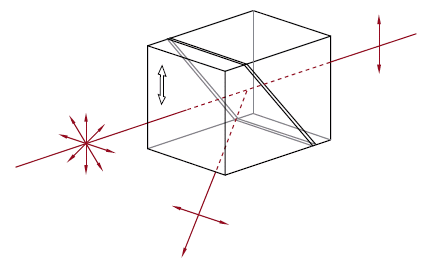 |
Double prism configuration and birefringent calcite produce extremely pure linearly polarized light. Total Internal Reflection of s-pol. at the gap between the prism while p-pol. is transmitted. |
| Rutile Polarizers | Rutile (TiO2) | s-pol. - 0° p-pol. absorbed by housing |
No | No | 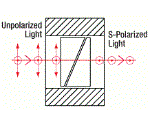 |
Double prism configuration and birefringent rutile (TiO2) produce extremely pure linearly polarized light. Total Internal Reflection of p-pol. at the gap between the prisms while s-pol. is transmitted.
|
| Double Glan-Taylor Polarizers | Calcite | p-pol. - 0° s-pol. absorbed by housing |
No | No | 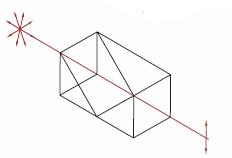 |
Triple prism configuration and birefringent calcite produce maximum polarized field over a large half angle. Total Internal Reflection of s-pol. at the gap between the prism while p-pol. is transmitted. |
| Glan Thompson Polarizers | Calcite | p-pol. - 0° s-pol. absorbed by housing |
No | No | 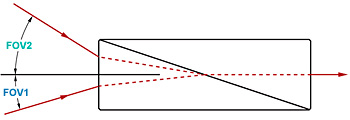 |
Double prism configuration and birefringent calcite produce a polarizer with the widest field of view while maintaining a high extinction ratio. Total Internal Reflection of s-pol. at the gap between the prism while p-pol. is transmitted. |
| Wollaston Prisms and Wollaston Polarizers |
Quartz, Magnesium Fluoride, α-BBO, Calcite, Yttrium Orthovanadate | Symmetric p-pol. and s-pol. deviation angle |
No | No | 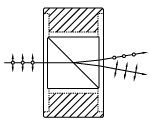 |
Double prism configuration and birefringent calcite produce the widest deviation angle of beam displacing polarizers. s-pol. and p-pol. deviate symmetrically from the prism. Wollaston prisms are used in spectrometers and polarization analyzers. |
| Rochon Prisms | Magnesium Fluoride or Yttrium Orthovanadate |
Ordinary Ray: 0° Extraordinary Ray: deviation angle |
No | No | 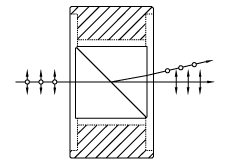 |
Double prism configuration and birefringent MgF2 or YVO4 produce a small deviation angle with a high extinction ratio. Extraordinary ray deviates from the input beam's optical axis, while ordinary ray does not deviate. |
| Beam Displacing Prisms | Calcite | 2.7 or 4.0 mm Beam Displacement | No | No | 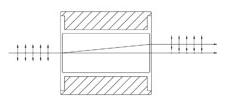 |
Single prism configuration and birefringent calcite separate an input beam into two orthogonally polarized output beams. s-pol. and p-pol. are displaced by 2.7 or 4.0 mm. Beam displacing prisms can be used as polarizing beamsplitters where 90o separation is not possible. |
| Fresnel Rhomb Retarders | N-BK7 | Linear to circular polarization Vertical Offset |
No | No | 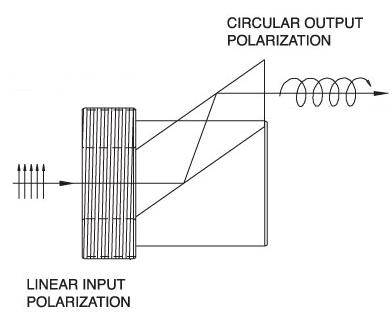 |
λ/4 Fresnel Rhomb Retarder turns a linear input into circularly polarized output. Uniform λ/4 retardance over a wider wavelength range compared to birefringent wave plates. |
| Rotates linearly polarized light 90° | No | No | 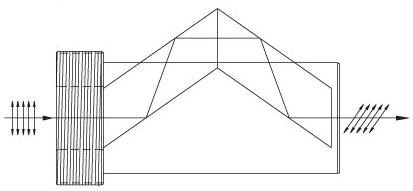 |
λ/2 Fresnel Rhomb Retarder rotates linearly polarized light 90°. Uniform λ/2 retardance over a wider wavelength range compared to birefringent wave plates. |
Beamsplitter Prisms
| Prism | Material | Deviation | Invert | Reverse or Rotate | Illustration | Applications |
|---|---|---|---|---|---|---|
| Beamsplitter Cubes | N-BK7 | 50:50 splitting ratio, 0° and 90° s- and p- pol. within 10% of each other |
No | No | 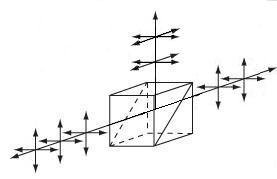 |
Double prism configuration and dielectric coating provide 50:50 beamsplitting nearly independent of polarization. Non-polarizing beamsplitter over the specified wavelength range. |
| Polarizing Beamsplitter Cubes | N-BK7, UV Fused Silica, or N-SF1 | p-pol. - 0° s-pol. - 90° |
No | No | 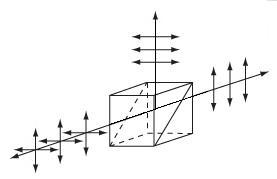 |
Double prism configuration and dielectric coating transmit p-pol. light and reflect s-pol. light. For highest polarization use the transmitted beam. |

 Zoom
Zoom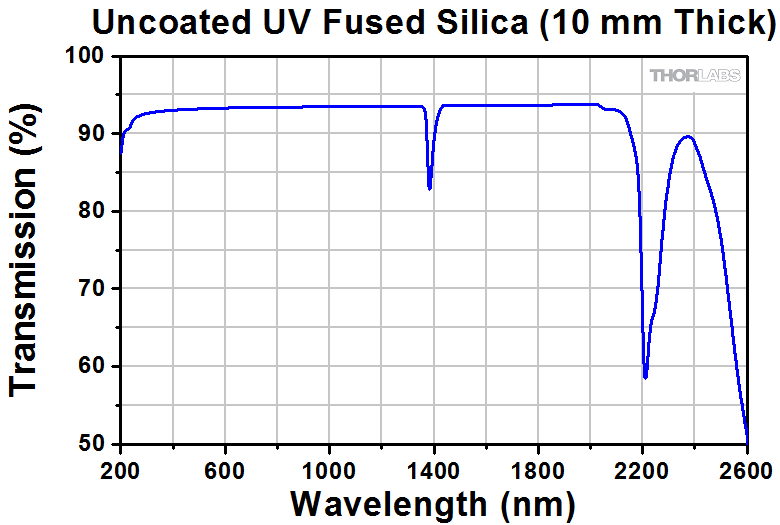
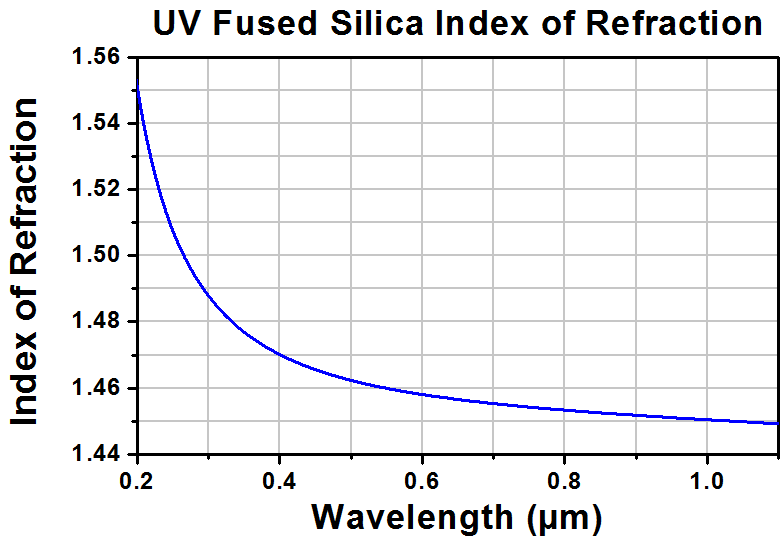
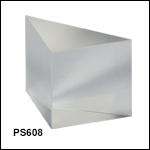
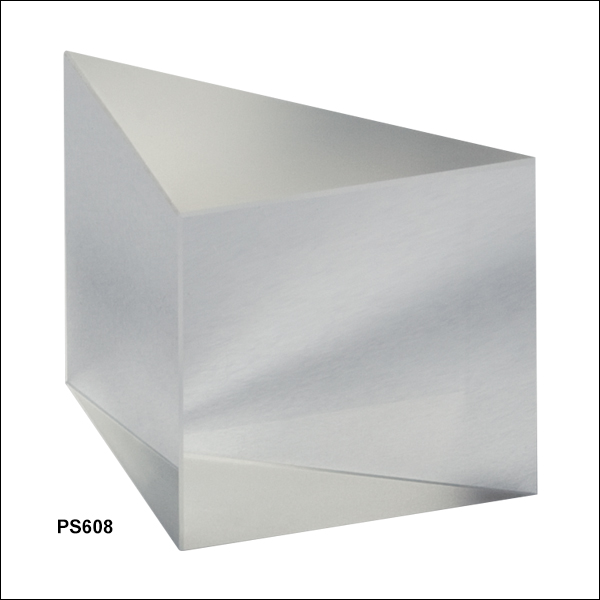
Choose a UV Fused Silica Right-Angle Prism if your application would benefit from higher transmission in the UV or a lower coefficient of thermal expansion. UV-grade fused silica offers high transmission in the deep UV and exhibits virtually no laser-induced fluorescence (as measured at 193 nm), making it an ideal choice for applications from the UV to the near IR. For a given wavelength, UV fused silica also has a lower index of refraction than N-BK7. Please see the Graphs tab for a graph of index of refraction vs wavelength for UV fused silica.
 Zoom
Zoom
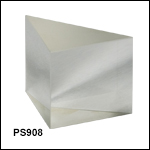
Choose an N-BK7 Right-Angle Prism if the additional benefits of fused silica are not required. N-BK7 provides excellent transmittance in the visible and near infrared portions of the spectrum. Please see the Graphs tab for a graph of index of refraction vs wavelength for N-BK7. Additionally, N-BK7 is a viable choice for UV applications down to 350 nm. For applications that demand maximum transmission, please see our AR-coated N-BK7 prisms below.
Our PS911K Knife-Edge prism offers the same features as our standard N-BK7 right angle prisms but features an unbeveled, precision 90° edge between the two legs. This means that the clear aperture reaches across this surface, making this prism ideal for applications where a larger clear aperture is beneficial. It also offers enhanced surface flatness and quality; see the Specs tab for Details
 Zoom
Zoom
Click to Enlarge
Transmission data is for two 25 mm right-angle prisms contacted into a cube. Click here for raw data.
Choose a CaF2 Right-Angle Prism for applications requiring high transmission in the 180 nm - 8 µm range. The material exhibits a low refractive index, varying from 1.35 to 1.51 within its usage range of 180 nm to 8.0 µm, as well as an extremely high laser damage threshold. Please see the Graphs tab for a graph of index of refraction vs wavelength for calcium fluoride. Calcium fluoride is also fairly chemically inert and offers superior hardness compared to its barium fluoride, magnesium fluoride, and lithium fluoride cousins.
 Zoom
Zoom
Click to Enlarge
Transmission data is for two 25 mm right-angle prisms contacted into a cube. Click here for raw data.
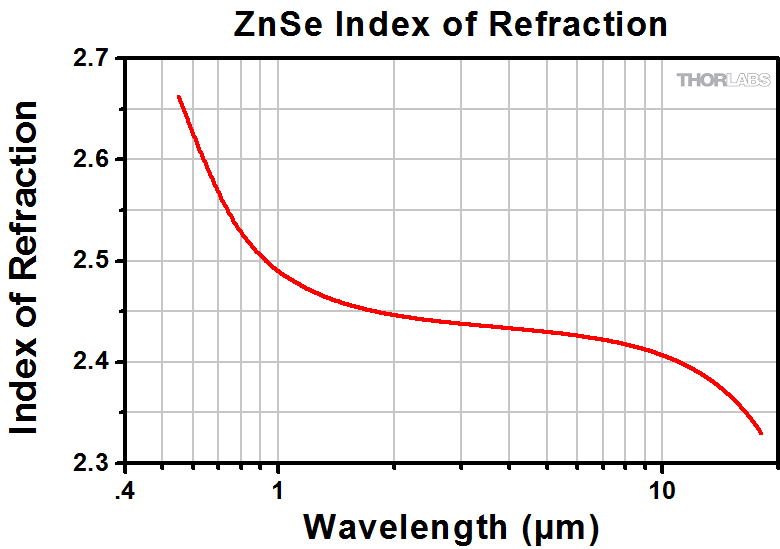
Zinc Selenide is ideal for use in the 600 nm - 16 µm range. It features low absorption (including in the red visible wavelength range) and high resistance to thermal shock. ZnSe is ideal for use in CO2 laser systems operating at 10.6 µm, including those with HeNe alignment lasers. Please see the Graphs tab for a graph of index of refraction vs wavelength for ZnSe.
When handling optics, one should always wear gloves. This is especially true when working with zinc selenide, as it is a hazardous material. For your safety, please follow all proper precautions, including wearing gloves when handling these prisms and thoroughly washing your hands afterward. Due to the low hardness of ZnSe, additional care should be taken to not damage these prisms. Click here to download a pdf of the MSDS for ZnSe.
Thorlabs will accept all ZnSe prisms back for proper disposal. Please contact Tech Support to make arrangements for this service.
 Zoom
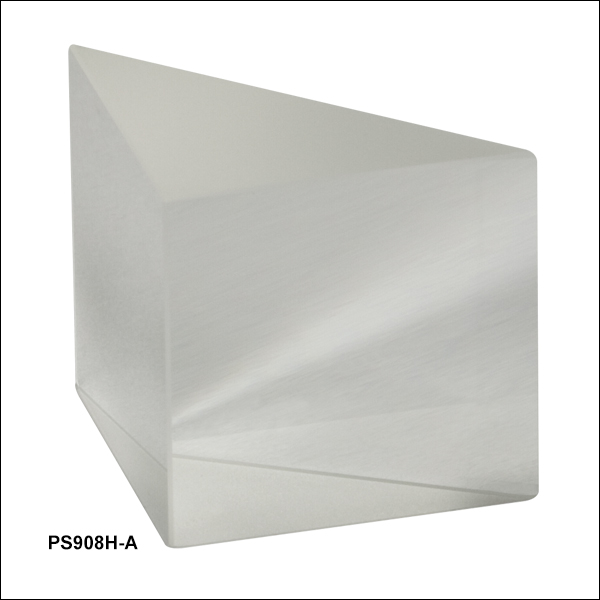
ZoomChoose an N-BK7 Right-Angle Prism with the appropriate AR Coating on the hypotenuse if you wish to use your prism as a retroreflector and you want to reduce surface reflections over the specified wavelength range of the coating.
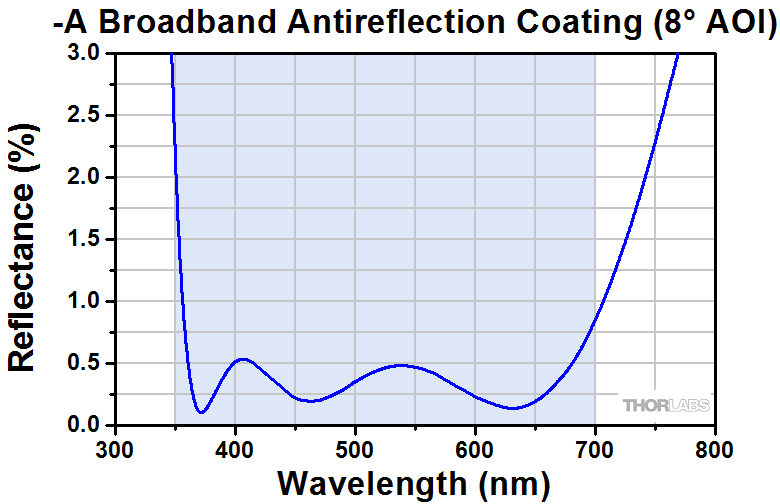
Click to Enlarge
Click Here for Raw Data
The blue shaded region indicates the specified 350 - 700 nm wavelength range for optimum performance.
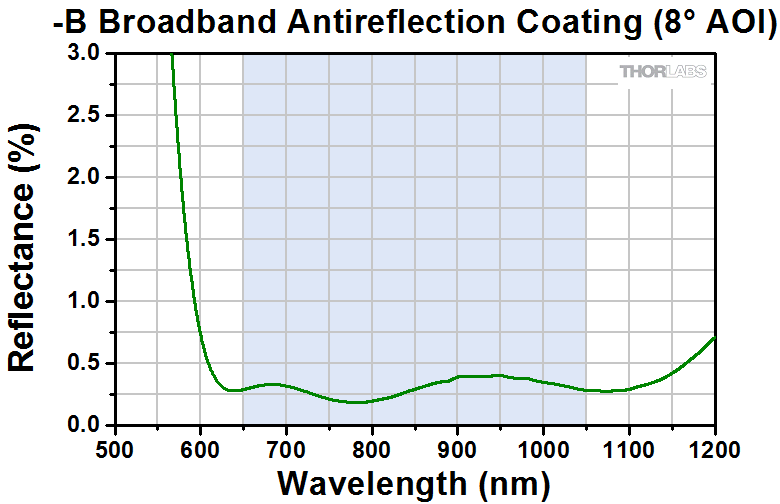
Click to Enlarge
Click Here for Raw Data
The blue shaded region indicates the specified 650 - 1050 nm wavelength range for optimum performance.
Click to Enlarge
Click Here for Raw Data
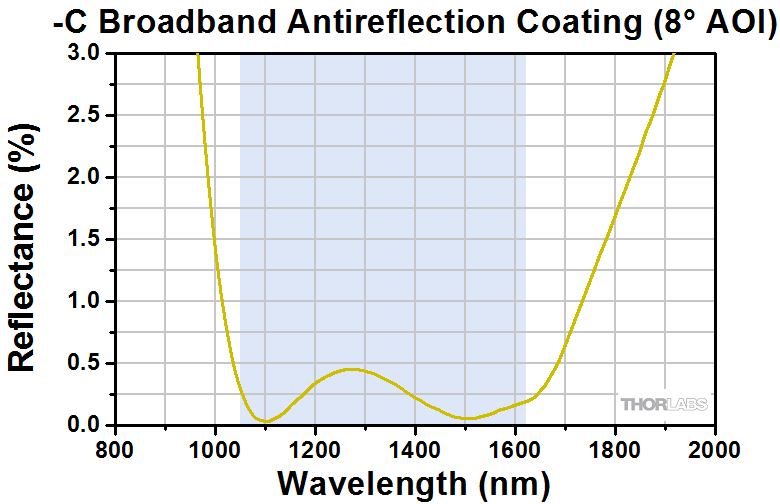
The blue shaded region indicates the specified 1050 - 1620 nm wavelength range for optimum performance.
 Zoom
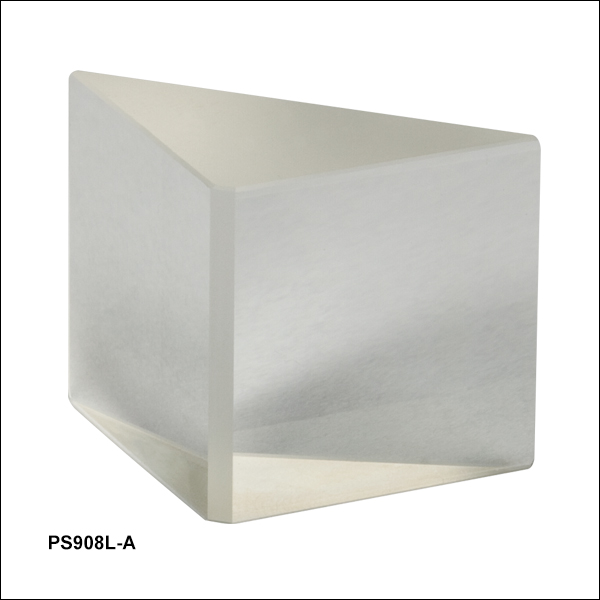
ZoomChoose an N-BK7 Right-Angle Prism with the appropriate AR Coating on the legs if you wish to use your prism as a 90 degree reflector and you want to reduce surface reflections over the specified wavelength range of the coating.
Click to Enlarge
Click Here for Raw Data
The blue shaded region indicates the specified 350 - 700 nm wavelength range for optimum performance.
Click to Enlarge
Click Here for Raw Data
The blue shaded region indicates the specified 650 - 1050 nm wavelength range for optimum performance.
Click to Enlarge
Click Here for Raw Data
The blue shaded region indicates the specified 1050 - 1620 nm wavelength range for optimum performance.
 Right-Angle Prisms